Thursday, October 19, 2023

Jeff Lupient's Tips on Safely Installing Car Seats


Jeff Lupient on Ensuring Properly Installed Car Seats
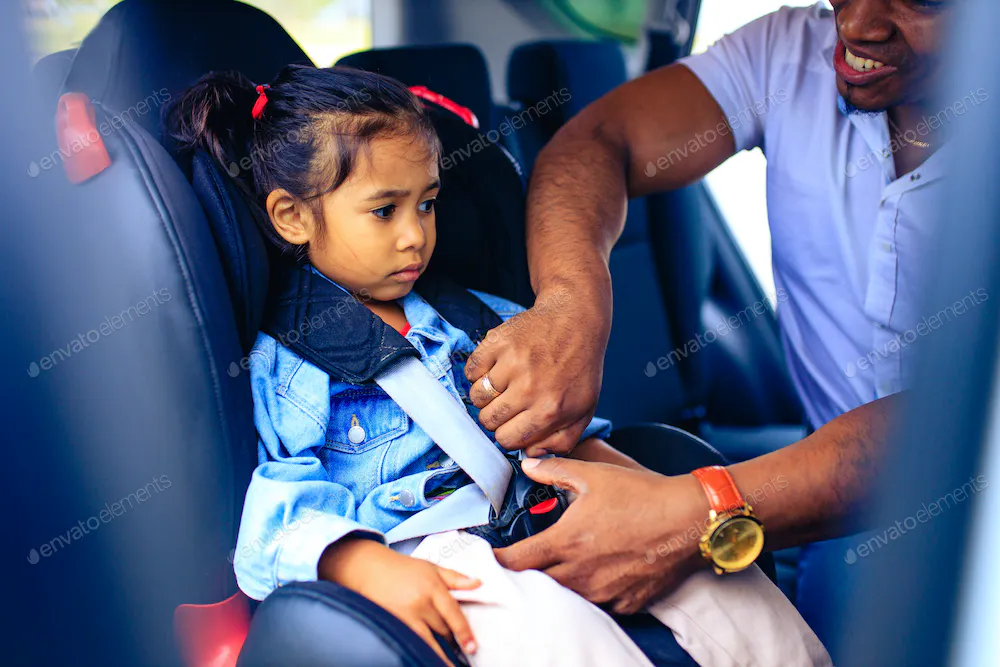
Securing a car seat in your vehicle is critical to ensuring your child's safety. Jeff Lupient shares essential steps and tips to ensure the car seat fits perfectly in your vehicle.

1. Check compatibility. 

Do your research before purchasing a car seat. Look for information in the car seat's user manual or the manufacturer's website to ensure compatibility with your vehicle's make and model. According to Jeff Lupient, some car seats are designed with specific vehicles in mind, so matching them appropriately is crucial. Review your vehicle's owner's manual for instructions and recommendations for child safety restraints and car seat installation. This will give you insights into your car's specific requirements.

3. Seek professional help. 

Jeff Lupient suggests visiting a retailer or child passenger safety inspection station when in doubt. Certified technicians are available to assist you in ensuring the car seat fits your vehicle perfectly and is installed correctly. They can also provide valuable insights and demonstrate the proper installation process.

4. Measure the vehicle. 

Before buying a car seat, take measurements of your vehicle's back seat. Jeff Lupient says paying attention to the width, depth, and spacing between seat belts or LATCH anchors is crucial. Ensure there is ample space for the car seat without any obstructions.

5. Check the angle indicator. 

Most car seats have an angle indicator to help you achieve the correct recline angle. Ensure that your vehicle's seats allow for the proper angle without causing interference with the car seat's installation.

6. Inspect seat belts and LATCH anchor points.
Examine your vehicle's seat belts and LATCH anchor points for functionality. These are critical for securing the car seat correctly. Double-check that there are no damaged or malfunctioning components.

7. Secure the installation. 

Follow the manufacturer's instructions to install the car seat in your vehicle. Ensure it is secure and does not move more than one inch in any direction when properly installed. Use your body weight to fasten it securely. Check that the car seat fits snugly against the seat, with no visible movement or gaps between the two.

8. Consider rear-facing vs. forward-facing. 

Depending on your child's age and size, you may need to choose between a rear-facing and forward-facing car seat. Jeff Lupient suggests checking if your vehicle can accommodate the type of car seat you require. If you have multiple vehicles, test the car seat's fit in each one. Different car seats may fit better in various vehicles.

Properly installing a car seat will give you peace of mind, knowing that your child is secure and protected while on the road. Remember, the safety of your little one should always be a consideration.

Jeff Lupient will discuss more tips and advice on buying and installing car seats in future articles. Follow this page for updates.

Tuesday, October 17, 2023

Jeff Lupient: Important Information Regarding Car Seats

Jeff Lupient shares vital information about car seats.

Jeff Lupient: Important Facts About Car Seats

istockphoto.com
When driving your car, your most important responsibility is keeping your passengers safe. If you're a parent, odds are your passenger is your child.

Every year, many children get hurt in car crashes. Because of this, it's paramount to use car safety seats properly. However, because so many different seats are available on the market, Jeff Lupient says many parents have difficulty choosing. To help out, he shares some important facts about car seats for children, which could aid parents in choosing the best and safest car seat for them.

On seat belts

If you install a car seat using the car's seat belt, Jeff Lupient says you must ensure the seat belt locks and holds the seat tightly. In a majority of newer cars, you can lock the belt by pulling it all the way out before allowing it to retract. It will keep the seat belt tight around the car safety seat. 

In addition, car safety seats come with built-in lock-offs, which means you can lock the belt, and you don't have to lock the seat belt separately. 

You can check the vehicle owner's manual for details on how your seat belt locks.

On the safest spot in the car for children

istockphoto.com
The safest place in a vehicle for children younger than 13 is the back seat, according to Jeff Lupient. If possible, it may be best for the child to ride specifically in the middle of the back seat. That said, installing a car safety seat tightly and securely in the middle is sometimes challenging, especially if the vehicle seat is narrow or uneven. Many vehicles don't have lower anchors for this position.

It is safest and best to put the car seat in a position where you can install it tightly and securely with either the lower anchor system or the seat belt. Jeff Lupient mentions that in some cases, this position may be on one of the back seat's sides, not the middle. Child passenger safety technicians (CPST or CPS technicians) are available to help you decide which place is best to install the seat in your vehicle.

On features that absorb crash energy

There are load legs and anti-rebound bars in rear-facing seats that help absorb the energy of a crash. Load legs decrease forward rotation in the initial phase of a car crash. On the other hand, anti-rebound bars protect the child during the second phase of a car crash from rearward rotation, explains Jeff Lupient.

More discussions and information about car seat installation and safety will be featured on this Jeff Lupient page. 

Friday, May 17, 2019

Beware the hidden problems with car brakes

Being the owner of a multiple-state car dealership chain, MN-based Jeff Lupient has seen his share of clients who have been taken by surprise with car troubles. Often, these car owners have no clue just what needs to be repaired or replaced in their automobiles until it’s too late.

Image source: honisoit.com
Mr. Lupient notes that one of the most important parts that car owners have to look out for is the brakes since it ties directly to passenger safety. Having the brakes compromised increases the risk of road accidents exponentially.

While other symptoms of brake trouble can be spotted right away, some signs may escape a car owner’s attention. Take for instance wheel vibration. While wheel vibration can mean a number of different things, it can also mean that the brake pads have frozen and the brakes have failed.

Image source: team-bhp.com
Another sign of faulty brakes, Jeff Lupient notes, is unsynchronized braking, or when one brake brakes ahead of the other. This is dangerous since it may turn the car completely around at high speeds.

But one of the hardest things to spot is insufficient braking. Mr. Lupient urges car owners to pay careful attention to the braking especially when they sense something is wrong with the car. If the rate of deceleration is lower than usual, it may be time to have the brakes checked.

Jeff Lupient is the CEO and president of MN-based Lupient Automotive Group. He is highly skilled in automobile sales, customer retention, and process improvement. For more articles like this, visit this
blog.

Thursday, July 12, 2018

Seven Important Tips For Fuel Efficiency

For one minute, fuel prices are stable; the next, they’re soaring.  Because of this, many people opt to get a hybrid car, one which uses more than one method of propulsion, combining petrol or a diesel engine with an electric motor.  However, most drivers still use vehicles that rely fully on petrol or diesel as fuel.   Here are some tips for more efficient fuel consumption.

Minimize car use.  On short trips, it’s better to walk or carpool to save on fuel.  This can also benefit the environment as a car’s catalytic converter (the exhaust emission control device) does not operate properly until it’s warmed up. 

Avoid the rush hour.  To avoid getting stuck in traffic jam for hours, either go to work an hour earlier than the usual morning commute or leave the office later than everybody else.

Image source: pixabay.com

Don’t floor it.  Hitting the pedal to the metal can wastes gas, as the harder one accelerates, the more fuel is wasted.  Step on the gas pedal gently and take about 5 seconds before accelerating the car up to 15mph from a stop.

Drive steadily.  Spurts of acceleration and dips in speed can increase one’s fuel consumption by up to 20 percent.  When driving on a highway, use cruise control.

Leave behind unnecessary weight.  A car needs more fuel to drive around with more weight.  Avoid carrying unnecessary stuff in a car’s trunk to drive efficiently.

Turn the air-condition off.  During windy and pleasant days, it’s better to keep the windows down.  Using the air-conditioning unit whole year round can be costly.

Image source: pixabay.com

Check car tires.  Make sure to pump the tires to the highest pressure recommended by the manufacturer and keep wheels properly aligned to reduce fuel consumption, improve handling, and extend tire life.

Jeff Lupient, the president and CEO of the Lupient Automotive Group in Minnesota, has worked every job in the automotive retail business as early as his mid-teens. For more articles like this, visit this blog.

Thursday, April 5, 2018

How To Handle Objection In Sales

It is easy for salespeople to get discouraged when faced with objections to their pitch, because it is inherent in most people to hate being rejected. However, objections are not always a bad thing, as a matter of fact, they can be a positive response, as long as they are viewed with the right perspective.

Image source: ippogrifogroup.com

An objection is an indication that the prospect is somehow interested in the product or service being offered to them. If they are totally blasé, they would not waste their time presenting their objections or simply respond with indifference.

Objections, though, should be managed well, so that there would be translation of sales. The following are some tips on what to do:


  • Listen with empathy: As soon as salespeople hear an objection, they should not cut in without letting the customer finish his retort. They should learn how to listen with understanding where the customer is coming from to make sure that they could address the real reasons behind the objections.
  • Validate the objection by repeating it: By echoing an objection, customers can be assured that their concerns are being attended to and are given an opportunity to clarify their statement.
  • Practice answering objections: An effective way of handling objections is by learning how to answer commonly raised ones. Objections can be anticipated through research and gathering feedbacks from prospects and customers.
Image source: phoneburner.com

Since he was 15 years old, MN-native Jeff Lupient has been in the automotive retail business. He has decades of experience in sales and business development, topics which you can read more about by visiting this website.

Thursday, August 17, 2017

The Six Degrees Of Autonomy Of Driverless Cars

In 2014, SAE International (Society of Automotive Engineers) published the concept of autonomy levels for automated driving systems, which the National Highway Traffic Safety Administration has already adopted. Here is a primer on the six degrees of autonomy:

Level 0 (No Automation): The human driver controls all of the driving actions, including acceleration, braking, throttle, and steering.

Image source: news.moov.com.ng

Level 1 (Driver Assistance): Recent car models already have this kind of automation in forms of adaptive cruise control and park assist. The human driver can have the computer take control of either the steering or acceleration and braking, but never both.

Level 2 (Partial Automation): A level-two automated car can take over both the pedals and the wheels, given certain conditions. The human driver must still keep his eyes on the road and regain control of the vehicle at any time.

Level 3 (Conditional Automation): This degree of automation is similar to the previous one, however, the human driver does not have to monitor the situation that much. The vehicle is capable of deciding on its own whenever dynamic incidents occur on the road, but the human driver serves as the fallback system. Because this autonomy level can cause potential issues on liability, car manufacturers would rather skip this level.

Level 4 (High Automation): A true self-driving car, the vehicle can accomplish all driving tasks on its own. A steering wheel, pedals, and throttle are still installed, though, to allow the human driver to take control if he prefers to.

Image source: martechtoday.com

Level 5 (Full Automation): Cars of this degree of autonomy cannot be driven by a human because there are no steering wheels and pedals.

Jeff Lupient is a hands-on dealership manager who has years of experience in the industry. Visit this website for similar articles on the automotive industry.

Thursday, July 20, 2017

Your Money’s Worth:How To Get The Best Value For a Used Car

Used cars are not always the cheaper option. Depending on the model and its value, a used car may be more expensive than a brand-new one. But if the model is not relatively new and is not a vintage one, it should cost cheaper than a new car. There are many reasons for buying a used car. Here are some tips to get the best value for its price.
                     Image source:negotiationtraining.com.au


Run a background check

Know the car’s record. Run a background check on it to know if it had been severely damaged, if the parts are still the original ones, or if it already had multiple owners before the sale. Run a vehicle history report and always consider a car that has a clean record.

Follow a checklist

Make a checklist of what to look for in a used car. Write a mechanical checklist to take note of which problems to look for, which parts are still good, and which part needs the most attention. Have a mechanic inspect the car. A professional would know how to look for car issues like leakages, and other electrical problems that can be hidden from the eyes of a buyer.
Image source:express.co.uk


Ask questions

Questions about financing and insurance should be asked to know if one is really getting the best value for a used car. A fair price should always be considered, and this can be achieved by comparing cars and their value for their cost. Ask the dealer if the car is a certified pre-owned vehicle. Tough questions should be asked to avoid issues once the car is bought.

Being a smart buyer prevents one from being tricked by dealers and even be tricked by the used car. Know what to look for and once convinced, have confidence in the purchase. After all, it’s the best value for its price.

Jeff Lupient, the CEO and President of MN-based Lupient Automotive Group, has been a leader in the car dealership industry for many years. For more on the car industry, click this link.